AIDA Copywriting Framework: John Mayer Ad Breakdown
A breakdown of how John Mayer's marketing team used the classic AIDA copywriting framework in a print magazine ad — and what you can learn from it for your own business.

Why a Guitar Player's Magazine Ad Is a Copywriting Masterclass
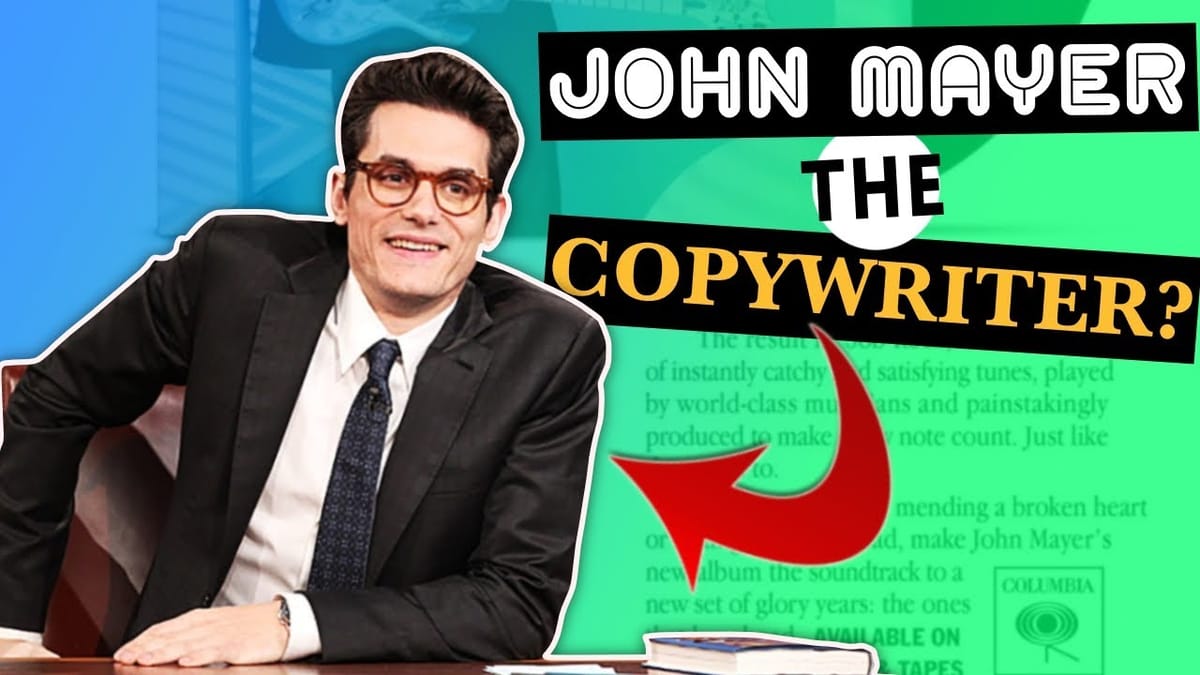
You wouldn't expect a John Mayer album advertisement to teach you anything about marketing your business, but here we are. His team ran a full-page, long-form copy ad in what appears to be People Magazine — and it's genuinely excellent copywriting.
The ad follows the classic AIDA framework (Attention, Interest, Desire, Action), a structure you'll find baked into most AI copywriting tools and direct response marketing courses. What makes this example worth studying is how cleanly each section does its job. Whether you're selling software, physical products, or services, the principles at work here translate directly to your own marketing.
Let's walk through each phase of the framework and pull out the practical lessons.
Attention: A Headline That Filters for the Right Audience
The headline takes up roughly a third of the page in massive type: "It's time to love an album again." That's doing more work than it looks like at first glance.
First, it's running in a print magazine, which already skews toward an older demographic. The word "again" is doing the heavy lifting — it implies the reader used to love albums, front to back, and has drifted away from that experience. That's a very specific person: someone old enough to remember buying a record and listening to every track in order, not someone who skips between singles on Spotify.
This is a critical copywriting lesson. Your headline doesn't need to grab everyone's attention. It needs to grab the right person's attention. If your ideal customer reads it and thinks "that's me," the headline has done its job. Everyone else can keep flipping pages.
Interest: Relate Before You Pitch
The next section of the ad reads: "When was the last time a record became one of your all-time favorites? It's probably been a while. Hey, growing up happens. You can't keep up with everything new that comes your way. That's why you still listen to those trusty old classics."
Notice what's not happening here. There's no mention of John Mayer. No product specs. No tracklist. No release date. Instead, the copy is building rapport with the reader by describing their experience back to them. That sense of "you get me" is what creates interest.
This is where most businesses go wrong. They jump straight into features, bullet points, and spec sheets — essentially treating marketing like an Amazon listing. There's a time and place for that, but long-form copy gives you the room to connect with someone emotionally before you ever mention what you're selling. If you can make the reader nod along and think "yeah, that's exactly how I feel," you've earned their attention for the next paragraph.
Desire: Sell the Process, Not Just the Product
The ad finally mentions John Mayer in the third section — well into the copy. It reads: "John Mayer kept listening to them too, until one day he had an idea. Why not make a record that feels like those unforgettable albums we grew up loving? It's not easy to do, and you'd basically have to be John Mayer to pull it off, but he is, and he did."
There's a bit of tongue-in-cheek humor here that keeps it from feeling like a hard sell. It's reminiscent of the Ryan Reynolds school of marketing — confident, self-aware, and entertaining.
The next paragraph goes deeper into the product itself: "a collection of instantly catchy and satisfying tunes played by world-class musicians and painstakingly produced to make every note count just like they used to." This is the desire phase at work, and it leverages a proven copywriting principle — talking about how a product is made increases its perceived value. It doesn't matter if every album goes through a similar production process. By describing the care and craftsmanship, the copy makes the listener feel like they're getting something special. You can apply this same principle whether you're selling craft beer, handmade furniture, or a SaaS product. Show people the work behind the result.
Call to Action: Emotion Over Instructions
The closing paragraph reads: "Whether you're mending a broken heart or hitting the open road, make John Mayer's new album the soundtrack to a new set of glory years — the ones that lay ahead."
That's not a typical call to action. It doesn't say "buy now" or "stream today" or "available at these retailers" (though the ad does include a small "available on Columbia Records" note at the bottom). Instead, it paints a picture of what your life looks like with this product in it. Road trips. Healing. A new chapter.
This is the kind of CTA that actually moves people. When you can connect your product to a feeling or an experience your customer already wants, the purchase becomes the obvious next step. They're not buying an album — they're buying a feeling they used to have. Compare that to the typical e-commerce CTA of "Add to Cart" and you can see how much room there is to improve your own marketing.
The Results: Nostalgia as a Marketing Strategy
At the time of filming, the album Sob Rock had reached number seven on Apple Music's top albums chart. Obviously, a single print ad didn't do that alone — Mayer also appeared on The Tonight Show and did an Apple Music interview, among other promotional efforts.
But what's consistent across all of these efforts is the strategy: lean into nostalgia. Rather than trying to compete with whatever's trending or chasing a younger demographic, the entire campaign doubles down on what Mayer's existing audience already loves. That's a lesson worth internalizing for your own business. You don't always need to chase new trends or reinvent your positioning. Sometimes the most effective marketing simply gives your audience more of what they already want.
Proof It Works: The Audience Response
The comments on Mayer's Facebook post tell the story. Multiple top fans responded directly to the headline — "We do love it," "I do love it" — which is exactly the behavior well-crafted copy is designed to trigger. When someone stops scrolling to respond to your ad's headline, that's engagement you can measure.
One commenter even noted that the ad "could have been a guitar player magazine ad. Brilliant." — calling out the quality of the advertising itself. That kind of meta-engagement generates even more visibility in social algorithms. The takeaway is straightforward: strong attention-getting headlines and clear calls to action actually do get people to stop and engage with your content, regardless of your industry or audience size.
How to Apply the AIDA Framework in Your Business
Whether you're writing landing page copy, email sequences, or even social media ads, the AIDA structure gives you a reliable skeleton to build on. Start with a headline that filters for your ideal customer. Build interest by relating to their experience before you pitch anything. Create desire by showing the craftsmanship behind your product. Close with a call to action that connects to an emotion, not just a transaction.
Long-form copy isn't dead — it's just underused. Most businesses default to bullet points and feature lists because they're easier to write. But when you take the time to walk someone through a narrative that resonates with their experience, you create a connection that a spec sheet never will. If a Grammy-winning musician's label sees value in long-form copy for a record launch, it's probably worth testing in your own marketing.
Watch the Full Video
Prefer watching to reading? Check out the full video on YouTube for a complete walkthrough with live demos and commentary.