Branding 5 Review: AI Brand Strategy Reports for a Fraction
Branding 5 is an AI-powered branding tool that walks you through a guided process to produce comprehensive brand strategy reports — the kind agencies charge tens of thousands of dollars for.

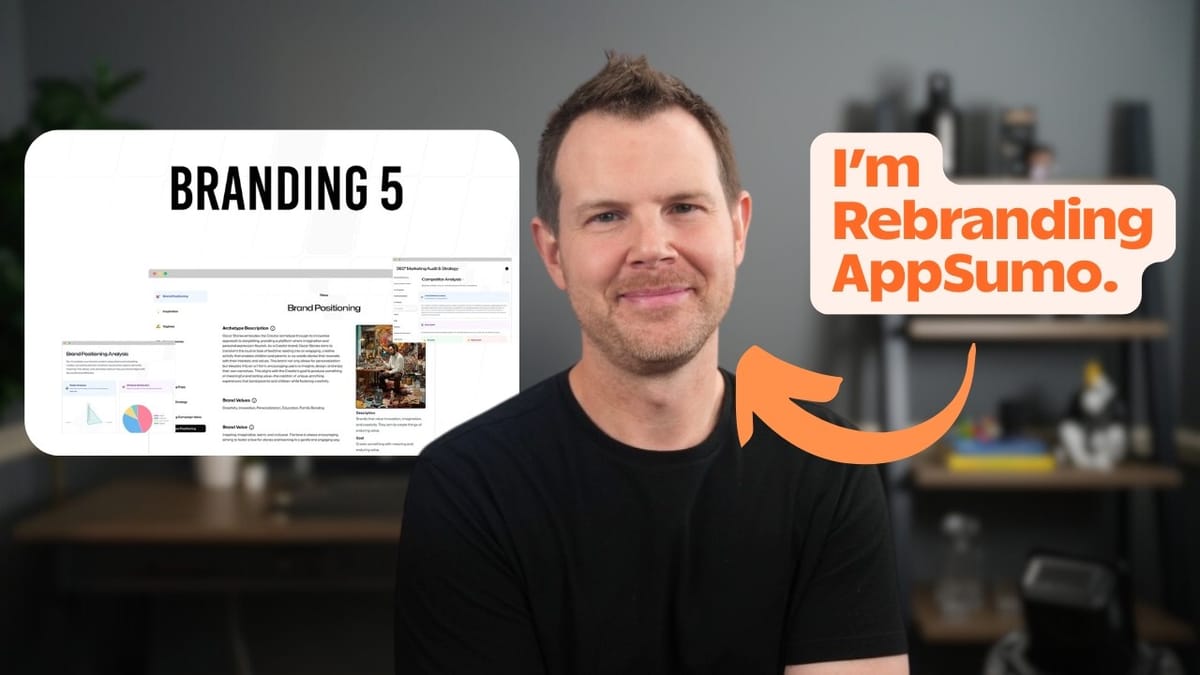
Branding 5
An AI-powered branding platform that generates comprehensive brand positioning reports including competitor analysis, ideal customer profiles, brand values, and marketing strategy.
Entrepreneurs, small business owners, and freelance branding consultants who need professional brand strategy without agency-level budgets.
Baseline, Looka, Brand Master Academy
What Branding Agencies Charge (And Why AI Is Disrupting Them)
Branding agencies are big business. Companies like Interbrand work with clients such as Bugatti, GE, and Lego — the kind of agencies most small businesses can only dream about affording. For a low seven-figure e-commerce business looking to invest in professional branding, you're looking at anywhere from $10,000 to $100,000 per project, with ongoing monthly retainers running between $1,000 and $50,000 depending on the agency tier.
That's a significant barrier for entrepreneurs and small business owners who know their brand needs work but can't justify five figures for a strategy document. This is exactly the gap that AI branding tools are starting to fill — offering structured, data-driven brand analysis at a fraction of the traditional cost.
What Is Branding 5?
Branding 5 is an AI-powered marketing platform that guides you through a structured process to learn about your company, then delivers brand positioning advice similar to what you'd get from a professional branding agency. It's currently available as a lifetime deal on AppSumo, though the pricing tiers matter.
Tier 1 and Tier 2 plans are one-time use — you generate a single report and that's it. If you want recurring access, you'll need Tier 3 (five brand reports per month) or Tier 4 (ten per month). These higher tiers open up an interesting business opportunity: if you have branding knowledge, you could potentially use Branding 5 as the engine behind an AI-first branding agency and recoup the cost within weeks by offering reports to clients.
Step 1: The Brand Questionnaire
The report generation process starts with a seven-question deep dive into your brand. You'll enter your company name, URL, a general description, target audience, unique selling proposition, origin story, and brand goals. It sounds straightforward, but these questions force you to articulate things about your business that many founders haven't properly defined.
Branding 5 includes a "Help me with AI" button on several questions that can analyze your website and generate concise answers. For instance, when testing with AppSumo as the brand, the AI condensed a lengthy about page into a tight general description and auto-generated a solid USP. The AI assistance isn't available on every question though — the origin story and brand goals require your own input, which makes sense since those are deeply personal to each business.
One nice UX touch: text fields expand so you can see everything you've written without scrolling. Small detail, but it matters when you're writing several paragraphs about your company.
Step 2: Brand Inspiration Analysis
The inspiration step asks you to share brands, websites, and copy that resonate with your vision. You can add up to three website URLs and three text examples — think brand voices, slogans, or web copy you admire. For the AppSumo test, the inputs included Apple, Tesla, and Amazon as website inspirations, along with the sales letter from 37signals' Once.com and Frank Kern's about page as text examples.
After submitting your inspiration sources, Branding 5 runs an AI analysis that identifies key themes, suggested styles, and potential strategic directions. The analysis picked up on themes like ownership and control, anti-subscription fatigue, and value-driven purchasing — all spot-on for AppSumo's positioning. It even suggested adopting a more contrarian, anti-establishment voice in marketing, which is genuinely interesting strategic advice.
One hiccup: the analysis did get stuck during the first attempt and required a page reload. After swapping out one of the text examples and rerunning, it completed without issues.
Step 3: Ideal Customer Profiles
Branding 5 offers two paths for creating ideal customer profiles: a guided quiz or full AI generation. The AI-generated ICPs are impressively detailed, covering demographics, psychographics, needs and motivations, core pain points, goals, and behavior patterns.
The first AI-generated profile — "The Resourceful Small Business Owner" — nailed the AppSumo demographic with age range 25-55, budget-conscious income level, and preferred communication channels including email newsletters, deal websites, and online content like blogs and case studies. The second profile, "The Value-Focused Solo Founder," captured another key segment perfectly.
The presentation quality stands out here. Each ICP is laid out in a clean, professional format that you could confidently show to a client without any embarrassment. All profiles are fully editable after generation, so you're not locked into whatever the AI produces.
Step 4: Competitor Analysis
The competitor analysis step lets you either paste in competitor URLs directly or have the AI suggest them. For AppSumo, the AI identified Stack Social, Dealify, and Rocket Hub — solid picks that demonstrated genuine market awareness. Each competitor gets a full breakdown including website screenshots, strengths, weaknesses, opportunities, and threats.
The actionable insights section is where this step really delivers value. Branding 5 recommended amplifying trust signals, championing undiscovered and early-stage software, curating rather than just aggregating AI tools, and strengthening community storytelling. The curation point is particularly sharp — AppSumo has historically performed best when it leans into careful curation rather than listing everything.
There was a minor UX friction point: after the AI suggested competitors, you still need to explicitly click "Add" before proceeding. Skipping that step triggers an error asking for at least one valid competitor URL, even though the suggestions are visible on screen.
Step 5: Brand Values
Brand values are generated by analyzing your website, which produces insights about stated aspirations, implied values, and current website tone. For AppSumo, the tone analysis identified the brand as "energetic, value-focused, and promotional" — accurate by any measure.
A standout feature in this section is the strategic fit chart that scores suggested values on a 0-100 scale. The analysis rated AppSumo strongest on "value" and "curated quality" while flagging community involvement as the weakest area — a fair assessment and exactly the kind of insight you'd want from a brand strategist.
One limitation worth noting: this step relies on website analysis, which raises questions about how useful it would be for pre-launch brands that don't have a site yet. If you're building a brand from scratch, you may need to work around this constraint.
Step 6: Brand Archetype Selection
Branding 5 incorporates Carl Jung's 12 brand archetypes framework — a well-established branding methodology that helps companies connect more deeply with their audience through consistent storytelling. The tool presents all 12 archetypes with descriptions and examples of well-known brands that fit each one.
After selecting your top archetypes (in this case, the Outlaw and the Creator for AppSumo), you move into trait refinement using a points-based slider system. This is a clever mechanic — you have a limited pool of points to allocate across traits like disruption, artistic expression, and independence. It forces you to prioritize, which mirrors the real branding principle that if everything is important, nothing is.
The final step is a swipe-based card game where you indicate whether traits like "original," "innovative," "rule-breaker," and "unconventional" represent your brand. The result for AppSumo was the Outlaw archetype: a brand that challenges the status quo, breaks conventions, and paves the way for change.
The Final Brand Report
After completing all steps, Branding 5 generates a comprehensive brand positioning report covering brand identity, marketing language, SEO recommendations, brand narrative, and more. The output is genuinely comparable to what you might receive from a professional consultant.
The report includes a share feature with basic white-labeling: you can add your own logo and custom header text, then share it via link. The shared report looks professional in a browser, though it still displays "Made with love in Austria" and links to Branding 5's support at the bottom. There's no custom URL option either — the link uses Branding 5's domain, which limits the white-label potential.
A PDF download option is notably missing. Currently, you'd need to manually copy content blocks one by one from different tabs, which gets tedious quickly. Being able to export the full report as a PDF — and potentially feed it into another LLM for copywriting — would be a significant workflow improvement.
Final Verdict: A-Tier Branding Tool
Branding 5 earns an A-tier rating, landing alongside Baseline as a complementary branding tool. Where Baseline focuses on the visual side — typography, colors, and design fundamentals — Branding 5 is all about messaging and strategy. Together, they cover the full spectrum of brand development at a fraction of what a traditional agency would charge.
The AI output throughout the entire process was consistently impressive, with only minor issues like occasional markdown formatting in text fields. The competitor analysis, ICP generation, and strategic recommendations all demonstrated genuine market understanding rather than generic filler.
For solo entrepreneurs doing their own branding, the lower tiers offer solid value for a single comprehensive report. For anyone considering branding as a service offering, the higher tiers with monthly recurring reports could pay for themselves remarkably quickly. The main areas for improvement are PDF export, better white-labeling options, and support for pre-launch brands without existing websites.
Watch the Full Video
Prefer watching to reading? Check out the full video on YouTube for a complete walkthrough with live demos and commentary.