ConvertKit Review: Best Email Marketing for Creators
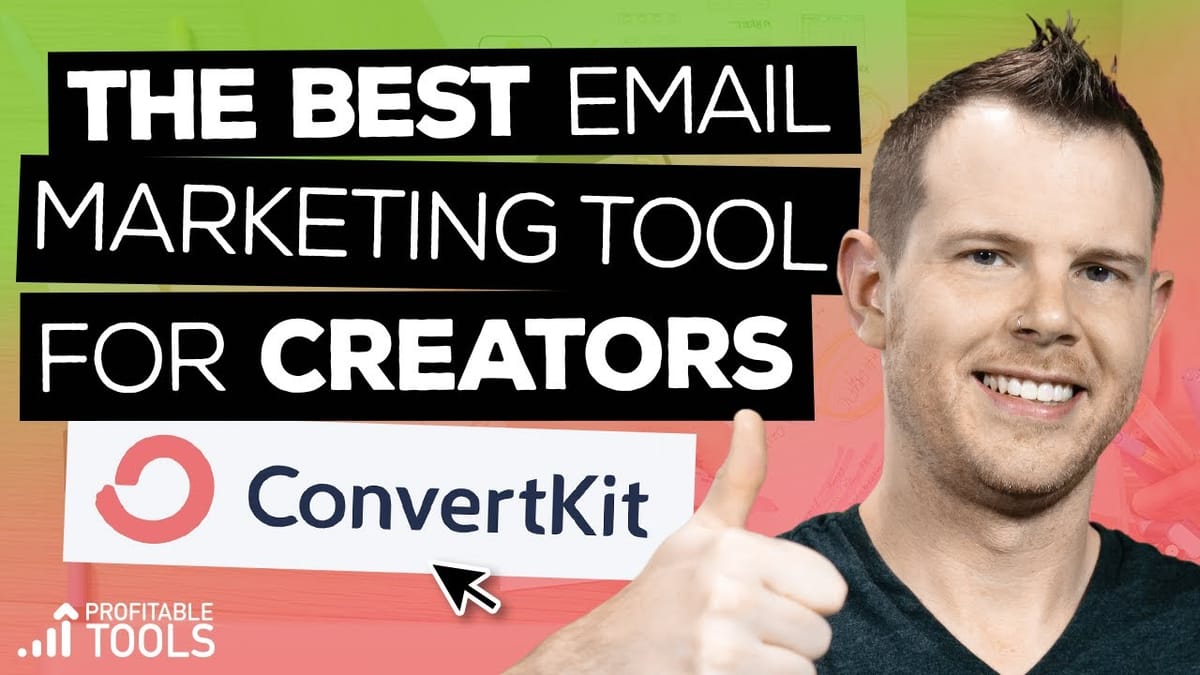
ConvertKit is purpose-built for creators who need powerful email marketing without the complexity. Here's a detailed look at its free plan, automation features, and why it scores a 9 out of 10.

ConvertKit
ConvertKit is an email marketing platform that lets creators build landing pages, collect subscribers, send broadcasts, and automate email sequences.
Content creators, bloggers, podcasters, authors, musicians, and anyone running online courses or membership sites.
Mailchimp, SendFox, ActiveCampaign, Drip
Why ConvertKit Is Built for Creators
Tim Ferriss uses ConvertKit to send his famous Five Bullet Friday newsletter to over 500,000 subscribers. That alone tells you something about the platform's credibility. But ConvertKit isn't just for mega-creators — it's designed for anyone producing content who needs a tech-friendly way to manage email marketing.
Whether you're a podcaster, blogger, author, musician, or running an online course, ConvertKit hits a sweet spot between power and simplicity. It packs all the features you need to build a profitable email list without burying you in complicated interfaces. That balance is exactly why it stands out in a crowded market of email marketing tools.
ConvertKit's Free Plan: A Game Changer
One of the biggest historical complaints about ConvertKit was the lack of a free tier. Beginners would often start with Mailchimp's generous free plan and only migrate to ConvertKit once their list — and revenue — justified the cost. The old rule of thumb is that every subscriber should earn you roughly a dollar per month, so a thousand-subscriber list making a thousand dollars a month could easily absorb ConvertKit's $29/month price tag. But migrating platforms is painful, and most people just stay where they started.
That's why ConvertKit's free plan changes the game. You can now start building your audience from day one on the same platform you'll use at scale. The free plan includes unlimited landing pages and forms, and if you sign up through a referral link, you unlock the ability to send broadcasts to up to 100 contacts immediately. Refer nine friends, and that grows to a thousand subscribers — all without paying a cent.
The catch? Automations and sequences are locked behind the paid plans. But honestly, by the time you need those features, your list should be generating enough revenue to justify the upgrade.
Landing Pages and Forms
ConvertKit's landing page builder won't compete with dedicated tools like Unbounce or Webflow for pixel-perfect customization, but that's kind of the point. The goal is to get a professional-looking page live in minutes so you can validate your idea before investing in a full website build.
The template library is solid — dozens of modern designs categorized by niche (podcast, ebook, webinar, etc.). You pick a template, click to edit the text, swap out images via built-in Unsplash integration, and adjust opacity and layout settings. You can publish to a custom domain by configuring your DNS, which means you don't need a separate hosting solution just for opt-in pages.
Forms are equally flexible. ConvertKit offers four styles: inline (embedded in a blog post), modal pop-ups, slide-ins, and sticky bars. Each comes with its own set of templates. The form builder lets you add, remove, and rearrange fields with drag-and-drop, set custom field types, and even inject custom CSS for fine-tuning. There's also a handy CSS snippet that removes the "Powered by ConvertKit" branding — a small detail that makes your pages look more professional.
Lead Magnet Delivery Done Right
Delivering lead magnets is one of ConvertKit's standout features, and it handles it better than almost any competitor. After someone subscribes through your form or landing page, ConvertKit sends an incentive email that can include a direct download link for your PDF, video, or whatever you're offering.
The flow is clean: subscriber fills out the form, receives a confirmation email (double opt-in), clicks to confirm, and gets automatically redirected to the download. If you prefer a single opt-in process, you can toggle auto-confirm and the lead magnet gets delivered instantly. No third-party delivery tools, no complicated webhook setups — it just works.
You also get control over what happens after someone has already subscribed. You can continue showing the form, hide it, or replace it with custom content like a thank-you message. And there's an invisible reCAPTCHA option to keep bots from flooding your list without adding friction for real users.
Tags, Segments, and Subscriber Management
Understanding tags and segments is essential for effective email marketing, and ConvertKit makes the concept approachable. Tags describe actions — when a subscriber fills out a form, purchases a product, or clicks a specific link, you tag them accordingly. Custom fields, on the other hand, store data about the subscriber: their name, location, company, or any other attribute you collect at opt-in.
Segments combine tags and custom fields into targeted groups. For example, if you're a musician planning a tour, you could create a segment for subscribers who downloaded your free track and live in Minnesota. Or if you're an author, you could target people who grabbed a free chapter but haven't purchased the full book yet.
The filtering system is genuinely powerful. You can include or exclude subscribers based on multiple conditions — tags they have or don't have, custom field values, purchase history, and more. It's the kind of targeting that lets you send the right message to the right people without maintaining separate lists.
Broadcasts and A/B Testing
Broadcasts are one-time emails sent to your entire list or a specific segment. ConvertKit's email editor is intentionally minimal — there's no complex drag-and-drop builder with dozens of widgets. You write your email, add images or buttons where needed, and hit send. It's the kind of simplicity that actually makes you more productive.
The editor supports headings, lists, block quotes, dividers, images with Unsplash integration, HTML blocks, and personalization tokens. Every link and button can trigger a tag when clicked, which feeds directly into your automation workflows. So if someone clicks your "Buy Now" button but doesn't complete the purchase, you can automatically follow up with a targeted sequence.
The A/B testing feature is particularly elegant. You write two subject lines, and ConvertKit sends each to 15% of your list. After measuring open rates, it automatically sends the winner to the remaining 70%. No manual monitoring, no statistical analysis — just enter two headlines and let the platform optimize for you. You can also preview emails as a specific subscriber to verify that personalization tokens render correctly before sending.
Email Sequences: Automating Your Sales Funnel
Sequences are where ConvertKit starts generating real revenue for your business. A sequence is a series of pre-written emails that send automatically at intervals you define. The classic use case is a sales sequence: someone downloads your free resource, and over the next week they receive a series of emails that build trust and lead toward a purchase.
Setting up a sequence is straightforward. You create the sequence, add your emails, and set the delay between each one — maybe one day, maybe two. You can exclude weekends so subscribers aren't getting sales emails on Saturday morning. Each email in the sequence uses the same editor as broadcasts, complete with link triggers and personalization.
A practical tip: if you've been sending broadcasts and notice that certain emails consistently drive sales, save those and repurpose them into a sequence. That way, every new subscriber automatically receives your best-performing content. It's a simple strategy that most creators overlook.
Visual Automations: Tying It All Together
ConvertKit's visual automation builder is where sequences, tags, and segments come together into intelligent workflows. You start with a trigger — someone joins a form, gets tagged, or makes a purchase — and then map out what happens next using a visual flowchart.
Here's a real-world example: a subscriber opts in for your free ebook chapter, which triggers the sales sequence. After the second email, they purchase the full book. Without automation, they'd keep receiving three more sales emails for something they already bought. With ConvertKit's automation, you set a condition that checks for a "purchased" tag. If the tag exists, the subscriber exits the sales sequence and enters a welcome sequence for new customers instead.
You can branch automations based on tags added, tags removed, specific dates, purchase events, and more. The templates for common scenarios — evergreen newsletters, webinars, product launches, post-purchase follow-ups — save significant setup time. If you've seen SendFox's automation builder, ConvertKit's will look familiar, but it's considerably more feature-rich.
Integrations and Ecosystem
ConvertKit's integration ecosystem is a major selling point. It connects natively with tools across e-commerce, membership sites, and website builders. Thrivecart, Shopify, Teachable, and WooCommerce handle the commerce side. Wishlist Member and other membership plugins manage access control. WordPress users get direct plugin support, and Elementor Pro's form builder connects to ConvertKit without any middleware.
WP Fusion deserves a special mention — it's a powerful bridge between WordPress and ConvertKit that enables advanced features like cart abandonment tracking. Gravity Forms integration is also available for more complex form setups.
Because ConvertKit is one of the most established creator-focused email platforms, virtually every new WordPress plugin and SaaS tool includes ConvertKit as an integration option. You're unlikely to run into a situation where your tech stack can't communicate with your email marketing.
Final Verdict: 9 Out of 10
ConvertKit earns a 9 out of 10, and it's easy to see why. It delivers all the features you need to build a profitable email marketing operation — landing pages, forms, broadcasts, sequences, and visual automations — without overwhelming you with complexity. That's the sweet spot for creators who'd rather spend time making content than wrestling with marketing software.
The free plan removes the last barrier to entry. You can start collecting subscribers today, validate your content idea with landing pages, and send broadcasts — all without paying anything. When your list and revenue grow enough to justify it, upgrading unlocks sequences and automations that can genuinely transform your business.
If you're a creator looking for an email marketing platform that grows with you from zero to hundreds of thousands of subscribers, ConvertKit is hard to beat.
Watch the Full Video
Prefer watching to reading? Check out the full video on YouTube for a complete walkthrough with live demos and commentary.