FlexClip Review: Is This Video Editor Worth the Lifetime Deal?
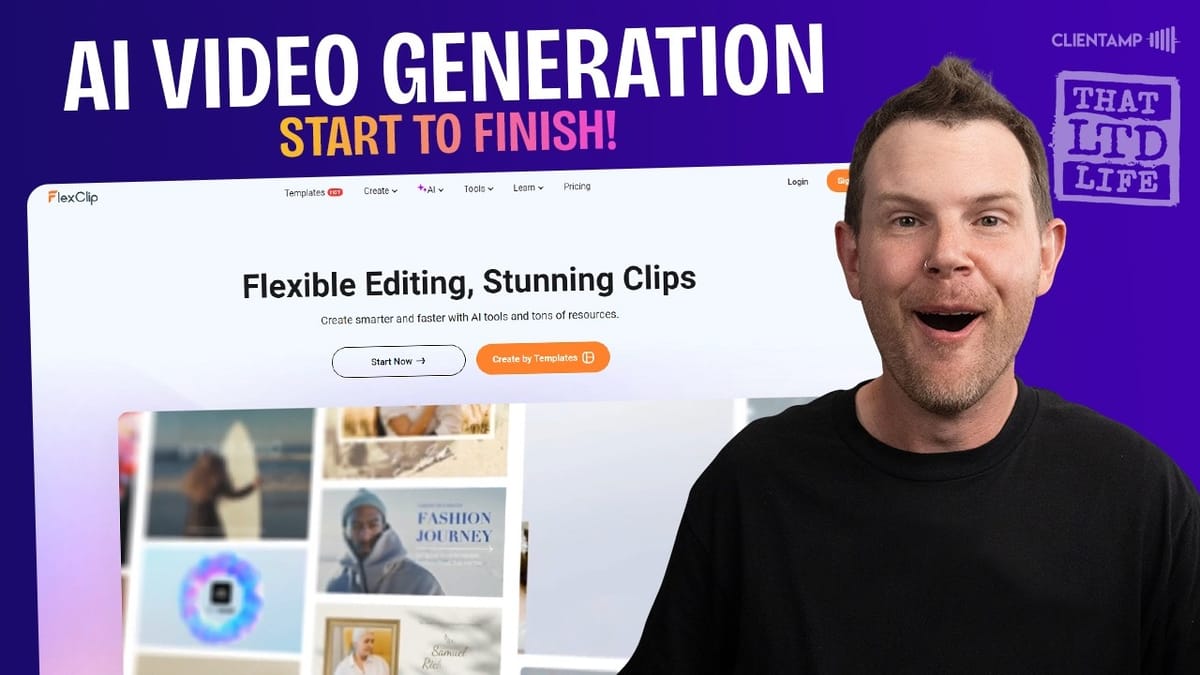
FlexClip is an online video creation tool with AI features, a massive stock library, and social media templates. Here's whether the AppSumo lifetime deal is worth picking up.

FlexClip
An online video creation and editing platform with AI-powered features, stock media, and social sharing built in.
Content creators, social media marketers, and small business owners who need to produce promotional videos quickly without professional editing software.
InVideo, Canva Video, Kapwing, Pictory
Plans and Pricing: Why You Should Skip Tier One
FlexClip's AppSumo deal starts at $69, but the tier structure here is unusual and worth understanding before you buy. The key differentiator between plans isn't just storage or export limits — it's actual video quality. Tier one caps you at 720p, which is essentially unusable for anything beyond phone-sized viewing. If anyone might watch your content on a laptop or TV, you need at least tier two for 1080p.
Tier three runs $207 and unlocks 4K exports, which is where most serious creators should land. You also get significantly more storage (three times more than tier two), 100GB of cloud storage, and 10x the hosting space. If you're an AppSumo Plus member, you'll save 10% on top of that.
One genuinely clever detail about FlexClip's pricing: all limits reset annually rather than monthly. That's unusual for AppSumo deals and actually quite practical. If you tend to batch your content creation — say, producing a bunch of videos leading up to Black Friday — you can burn through your allotment in a concentrated window without worrying about monthly caps.
First Impressions and the User Interface
The FlexClip interface will feel familiar if you've ever used InVideo or similar browser-based video tools. The layout is clean and intuitive, with a prominent orange "Create a Video" button on the left sidebar alongside your projects, templates, and favorites.
The platform is clearly geared toward short-form social media content — you'll see plenty of vertical video templates front and center. But it's not limited to that. There's a solid template library covering everything from app promos to fitness content, and you can favorite templates, elements, audio clips, and effects for quick access later.
Elements are the smaller assets you drop into your videos — think animated GIFs, icons, and decorative overlays. Effects are visual treatments you layer onto your footage. Both categories are browsable and searchable, and the favoriting system means you can build up a personal library of go-to assets over time.
Building a Video from a Template
Starting from a template is the fastest way to get a professional-looking video out of FlexClip. Selecting a template like the "Technology Clean App Promo" gives you a multi-scene project with transitions, animations, and placeholder content already wired up.
Customization is straightforward. Click any element on the canvas to edit text, swap images, adjust positioning, or replace logos. The on-screen controls are surprisingly capable for a web app — you can drag elements around, resize them, and adjust layering without hunting through menus. This is actually an area where FlexClip has a genuine advantage over heavyweight desktop editors like Final Cut Pro or DaVinci Resolve, where something as simple as animated title placement can require multiple tools and workflows.
The timeline at the bottom shows all your scenes as cards with transitions between them. Double-clicking the transition handles opens an expanded timeline view where you can see individual element animations and adjust their timing. Grouping elements and syncing their animations takes a little trial and error, but once you understand the animation panel — where you can set fade directions and durations — it clicks into place.
AI Text-to-Speech and Voice Options
FlexClip includes AI text-to-speech under its Tools menu. You paste in your script, pick a voice, and generate audio that you can drag directly into your timeline. The generated audio saves to your project media, so you can reuse it across scenes.
There's a caveat worth mentioning: on Safari, the voice selection appeared limited to a single option (Jenny), which sounded noticeably robotic. Switching to a Chromium-based browser like Arc revealed the full voice library, which includes dozens of voices across multiple languages. Some of them sound significantly more natural than others, so it's worth auditioning a few before committing.
For creators building faceless YouTube channels or producing quick promotional clips, this feature alone could justify the purchase. You can go from a text script to a narrated video without ever recording your own voice. The quality won't fool anyone into thinking it's a human narrator, but for social media content and explainer videos, it's more than serviceable.
AI Subtitles and Translation
The subtitle system in FlexClip offers both AI-generated and manual options. With AI auto subtitles, you pick a visual template for how the text appears on screen, hit generate, and FlexClip transcribes the audio in your project. In testing, it handled narration over background music accurately, picking up every word correctly.
Once generated, subtitles are fully editable — you can adjust timing, fix any transcription errors, and reposition the text on screen. There's a decent selection of subtitle style templates ranging from simple lower-thirds to more stylized bordered text.
FlexClip also includes a translation feature that can convert your subtitles into other languages. Like the voice selection, this feature may not display all options in Safari but works properly in Chrome-based browsers. Being able to generate subtitles and then immediately translate them into Spanish, French, or other languages is a nice workflow for creators targeting international audiences.
Recording, Uploading, and Cloud Storage
Beyond templates and AI generation, FlexClip supports bringing in your own media. You can upload files recorded with external tools, import from an SD card, or record directly in the browser. The recording options cover screen plus webcam, screen only, and webcam only — essentially everything you'd need for tutorials, talking-head videos, or screen demos.
Uploaded media lives in your project by default, but you can also save assets to the cloud for reuse across projects. This is particularly handy for recurring elements like intro sequences, logos, or branded outros. With tier three's 100GB of cloud storage, you have plenty of room to build a reusable asset library.
The hosting feature deserves attention too. When you export a video, FlexClip generates a shareable link where anyone can watch (and optionally download) your content. It's not a full social platform — there's no commenting or engagement features — but for quickly sharing a promo video with a client or team member, it's convenient to have hosting baked right into the editor.
Exporting and Aspect Ratio Flexibility
Exporting is straightforward: choose your resolution (up to 4K on tier three), frame rate (up to 30fps), and quality level, then hit export. One limitation to be aware of — if your project's source assets aren't 4K, FlexClip won't upscale them. You'll get a warning and need to export at the highest resolution your assets support.
FlexClip supports multiple export formats beyond standard video. You can export as GIFs (best for short clips since they won't have audio) or as audio-only files, which could be useful for podcast-style content generated with the AI voice tools.
The aspect ratio system is impressively flexible. You can switch between 16:9, 9:16 vertical, 1:1 square, 4:5, and even 21:9 ultrawide at any point during editing. When you switch, FlexClip automatically repositions elements to fit the new frame. It's not always perfect, but it's a massive time-saver compared to manually rebuilding a project for each platform. The undo history appears to be unlimited, so you can experiment freely without fear of losing your layout.
Stock Library: Unlimited Access on Tier Three
Tier three includes unlimited access to FlexClip's stock library, which covers video footage, images, and audio. The library is searchable and clips can be dragged directly onto your timeline. Stock footage quality is solid — proper cinematography with good resolution — though most clips run 15 to 30 seconds, so you'll be combining multiple clips for longer sequences.
The stock library doubles as a standalone asset source. There's nothing in the licensing that prevents you from downloading stock footage through FlexClip and using it in projects on other editors like Final Cut Pro or DaVinci Resolve. For creators who already pay for stock footage subscriptions, this could effectively replace that cost.
Playback of stock clips in the browser timeline can be hit or miss. Since rendering happens in the cloud rather than on your local machine, some clips take time to process before they'll play smoothly. This is a general trade-off of cloud-based video editing — you're not leveraging your local hardware. The workaround is to preview clips before adding them to your timeline, where they play back more reliably.
Green Screen and Background Removal
FlexClip includes green screen (chroma key) support, but with an important distinction: it requires actual green screen footage. This isn't an AI-powered background removal tool that can isolate a subject from any background. You need to have recorded with a physical green screen for the feature to work properly.
There is a background remover tool for static images, but it requires manual brush work rather than automatic AI detection. For creators who already shoot with a green screen setup, FlexClip's chroma key will handle the compositing. But if you were hoping to drop in any footage and magically remove the background, you'll need to look elsewhere for that capability.
The speed control feature is worth mentioning here as well. You can adjust clip playback speed and even apply curve-based speed ramping with preset templates — useful for creating dramatic slow-motion or time-lapse effects from your footage.
AI Video Generator: From Text to Timeline
FlexClip's AI video generator is the headline feature for creators who want to produce content quickly with minimal manual work. The "Article URL to Video" option lets you paste in text (or a URL), choose a subtitle style, and generate a complete video with AI narration, stock footage, and subtitles — all matched to your content automatically.
In testing, pasting a single paragraph of text produced a 41-second video with relevant stock footage pulled in, AI voiceover narration, and styled subtitles. The result needed some tweaking — the background music got too loud toward the end, and some text elements ran off-screen — but the foundation was solid. Fixing issues like audio levels is intuitive: use the split tool to isolate a section, right-click for audio settings, and adjust the volume.
For faceless YouTube channels, social media content, or quick promotional videos, this AI generation workflow could dramatically cut production time. You're not going to produce cinema-quality content this way, but for getting informational or promotional videos published quickly, the speed-to-quality ratio is genuinely impressive.
Final Verdict: 7.7 out of 10
FlexClip earns a 7.7 out of 10 — a strong score that reflects a genuinely capable online video editor with some notable limitations. The template system is polished, the AI features work well (once you're out of Safari), and the stock library on tier three adds real value to the deal.
Where FlexClip shines is in short-form content creation. Social media promos, faceless YouTube videos, quick explainers, and client deliverables can all be produced efficiently without touching a professional desktop editor. The aspect ratio switching, built-in hosting, and AI generation tools make it a surprisingly complete platform for that use case.
The main limitations are what you'd expect from any cloud-based editor: playback can stutter while processing, you're dependent on server performance, and it's not the right tool for long-form video production where a desktop NLE like Final Cut Pro or DaVinci Resolve will always be more powerful. The green screen tool also requires actual green screen footage rather than offering AI background removal.
For creators who need to produce polished short-form video content regularly and want to avoid the learning curve of professional editing software, FlexClip on the AppSumo tier three plan represents solid value — especially with the unlimited stock library access and 4K exports included.
Watch the Full Video
Prefer watching to reading? Check out the full video on YouTube for a complete walkthrough with live demos and commentary.