Pickaxe Review: Build and Monetize AI Tools Without Code
Pickaxe makes it surprisingly easy to create AI-powered tools like chatbots and smart forms, then monetize them through a built-in studio storefront — no coding required.

Pickaxe
Pickaxe lets you build, deploy, and monetize AI-powered chatbots and forms without writing any code.
Entrepreneurs, consultants, and creators who want to package their expertise into AI tools and sell access to them.
OpenAI Custom GPTs, Botpress, Typeform AI, MindStudio
What Is Pickaxe and Why Does It Matter?
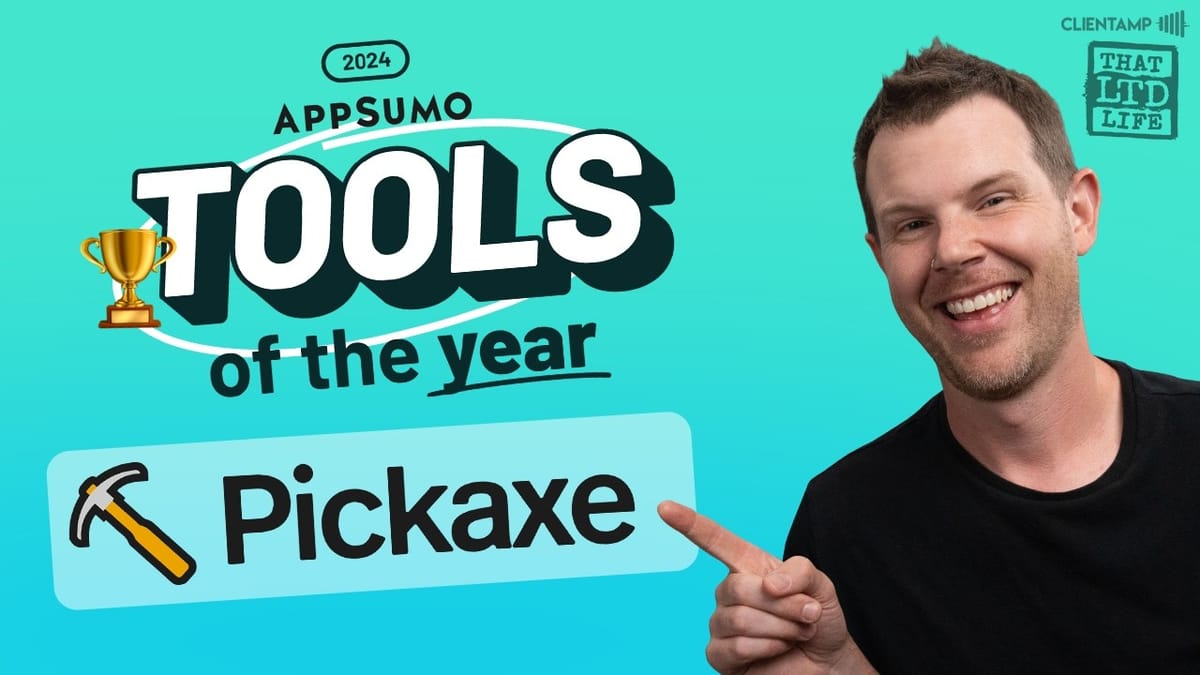
Remember when OpenAI launched custom GPTs and everyone thought it would be the next App Store gold rush? That never quite happened. Pickaxe, though, quietly delivered on that promise — and earned itself a spot as one of AppSumo's six Tools of the Year for 2024.
Pickaxe is a platform that lets you build AI-powered tools (chatbots and smart forms), deploy them on your own domain or an embedded widget, and charge people to use them. It's the monetization layer that custom GPTs never got. The whole system is designed to be approachable even if you've never written a line of code, and once you get past a couple of platform-specific terms, it's genuinely one of the easier AI builders out there.
The two core concepts are simple: a "pickaxe" is any AI tool you create (a chatbot or a form), and a "studio" is your storefront where you bundle and sell those tools. That's really all the vocabulary you need to get started.
Building an AI-Powered Form
The form builder in Pickaxe works differently from anything you've used before. Instead of dragging and dropping fields, you're actually writing a prompt on the left side of the screen, and the form materializes on the right. Wherever you need user input, you insert a placeholder — and Pickaxe automatically generates the corresponding form field.
For example, you could build a marketing software explainer by writing a prompt like: "Help explain the function of [user input] to a beginning entrepreneur who isn't super technical." That bracketed input becomes a text field on the form asking "What tool do you want to learn about?" You can set each input as short answer, long answer, multiple choice, or checkbox, and even control maximum character lengths.
Once a user submits the form, the AI processes their answers through your prompt and delivers a tailored response. But here's the nice part — the conversation doesn't end there. Users can continue chatting with the bot after the initial form submission, asking follow-up questions and digging deeper into the topic. The form essentially acts as a guided entry point into a full AI conversation.
Testing the Form in Action
Once you publish your form, you can share it via a direct link, embed it on your website, or add it to a studio. Testing it is as simple as opening that link and filling in the fields.
In a quick test with a marketing software explainer form, asking about CRMs and self-hosted options, the bot delivered a solid breakdown of what a CRM does, its key functions, and then recommended specific self-hosted options like SuiteCRM, EspoCRM, VTiger, and Odoo. Follow-up questions worked naturally too — asking which was easiest to install and maintain got a thoughtful, accurate answer.
The quality of output naturally depends on which AI model you select, but even with a mid-tier model the results were practical and actionable. It's a genuinely useful way to guide users toward better prompts and more relevant AI responses.
Capabilities: File Uploads, Image Generation, and More
Every pickaxe you create comes with a set of optional capabilities you can toggle on or off. File uploads let your users attach documents for the AI to analyze — useful for more complex tools, though you'd skip it for a simple explainer form.
Image generation is where things get interesting. Pickaxe supports a wide range of image models including DALL-E, Midjourney, and Flux. Toggle it on and your AI tool can generate visuals as part of its responses. This opens up use cases well beyond text — think logo brainstorming tools, social media image generators, or product mockup assistants.
Configuration and Customization
The configuration panel gives you fine-grained control over how your pickaxe looks and behaves. You can generate or upload a custom avatar for your bot, control token limits and creativity settings, and choose whether users can continue chatting after a form submission or if the interaction is one-and-done.
Visibility settings let you make your pickaxe public, unlisted, or completely private for internal use. There's also a cloning option — turn it on and other Pickaxe users can duplicate your tool to their own account, using their own credits rather than yours. It's a clever distribution mechanism if you want to spread your tool without bearing the cost.
The interface keeps everything clean and accessible. You won't find yourself buried in menus or hunting for options — each setting is exactly where you'd expect it to be.
Training Your AI with Learn and Act
The Learn tab is where you feed your pickaxe custom knowledge. You can upload up to 50 documents per tool — PDFs, web pages, text files — giving the AI a specific knowledge base to draw from. This is what separates a generic chatbot from a genuinely useful, specialized tool.
The Act tab adds integrations and extended capabilities. Think of these like plugins: you can enable Google search so your bot can pull real-time information, add PDF generation for deliverables, connect voice generation through ElevenLabs, or wire up webhooks through Make and Zapier for workflow automation. There's even a TaskMagic integration and the option to build custom actions if you're a developer. These actions transform a simple chatbot into something that can actually do things in the real world.
The Automatic AI Builder
If building from scratch feels like too much work, Pickaxe has an automatic AI builder that creates your chatbot for you. It asks just three questions: what type of tool do you want to build, what will people do with it, and what's your unique take on it?
In a test run building an email marketing assistant — a tool that checks for spam trigger words, ensures there's a clear call to action, and makes emails more readable — the AI builder generated a complete, functional chatbot in under a minute. The resulting prompt was solid enough to use immediately, though you can always refine it afterward.
The builder even handles the nuance reasonably well. After a quick prompt adjustment to make the bot explain its changes before rewriting (rather than just silently fixing the email), it caught spam triggers like "amazing," "unbelievable," and "miracle working," explained why each was problematic, and offered a revised version only when asked. It's a genuinely useful shortcut for getting a working prototype up fast.
Chatbot Configuration Deep Dive
Configuring a chatbot follows the same logic as forms but with a few chat-specific additions. You can set introduction messages and icebreakers to guide users into productive conversations, and there's a prompt injection feature that lets you add persistent instructions the bot references throughout the conversation — similar to the "custom instructions" you see in tools like ChatGPT.
Training dialogue is a standout feature for chatbots. You can upload example conversations that demonstrate exactly how you want the bot to interact, giving it a communication style and response pattern to follow. Combined with the 50-document knowledge base from the Learn tab, you can build chatbots that genuinely feel like they understand your specific domain.
Model selection is flexible too. You can choose from a range of OpenAI and Anthropic models depending on your needs and budget. The output quality difference between, say, GPT-3.5 and GPT-4 is noticeable, so it's worth experimenting to find the right balance of cost and quality for your use case.
Credits, Pricing, and API Key Options
Pickaxe operates on a credit system. The AppSumo Tier 2 plan includes 750 credits per month, with each chat interaction consuming one credit. For tools with any kind of audience, those credits can disappear fast.
If you need more, you can purchase additional credit packs ranging from $5/month for 250 extra credits up to $50/month for 2,500. But the more economical approach is to connect your own API key. Pickaxe supports both OpenAI and Anthropic API connections — it automatically detects which one you need based on the model you've selected. This way, you pay the API provider directly at their standard rates, which is typically far cheaper than burning through platform credits.
This dual approach is smart. Casual users and people just getting started can rely on the included credits, while power users and anyone running tools at scale can bring their own API keys and keep costs manageable.
Publishing and Privacy Settings
When you publish a pickaxe, you get granular control over who can access it and how. Visibility can be set to public, unlisted, or private. You can whitelist specific domains so your embedded widget only works on approved sites — a must if you're selling access and don't want people scraping your embed code.
There's also a per-user prompt limit. By default it's unlimited, but if you're monetizing, you'll want to cap it — something like 30 runs per user keeps things profitable. The clonable toggle, community response feed (which works like Midjourney's public gallery), and various deployment options round out the publishing workflow.
The community response feed deserves a quick callout: it displays everyone's outputs publicly, which can be great for inspiration and community building. Just be transparent about it — you don't want users thinking their conversations are private when they're actually visible to everyone.
Studios: Your AI Tool Storefront
Studios are where Pickaxe really differentiates itself from other AI builders. A studio is essentially a branded membership site where you bundle multiple pickaxes and sell access to them. Think of it as your own mini SaaS product, built entirely on AI tools you've created.
Creating a studio takes just a few minutes. You select which pickaxes to include, name your studio, generate a description, and choose whether it's public or invite-only. Then comes the monetization setup: you can offer subscriptions, one-time payments, or make it free. Subscription tiers are fully customizable — set any monthly price, define usage limits per tier, and even restrict certain pickaxes to higher tiers.
For example, you could have a $5/month basic tier with access to one tool and limited uses, and a $10/month pro tier with unlimited access to everything. Pickaxe handles the billing through Stripe, so once you connect your account, payments just work.
The Studio Landing Page and Branding
Pickaxe auto-generates a landing page for your studio complete with a hero section, tool listings, and pricing display. The built-in editor lets you click and modify any element — swap out images, adjust colors to match your brand, upload your logo, and toggle sections on or off.
It's not a full website builder, but it doesn't need to be. The landing page is clean, functional, and gets the job done. You can even connect a custom domain with a straightforward CNAME or ANAME record setup, and Pickaxe handles the SSL certificate automatically.
For anyone concerned about branding, the white-label option lets you remove all Pickaxe branding. There's also a custom code injection section for analytics scripts, additional JavaScript, or CSS tweaks if you need more control over the appearance.
Account Management, Popups, and Typography
The studio comes with a complete user management system out of the box. There's a dedicated account page where subscribers can view and manage their subscriptions, plus pre-built popups for login, signup, access denied messages, password reset, and plan upgrades. Each popup is customizable, so you can match the messaging to your brand voice.
Typography options let you customize fonts across your pickaxes — headers, body copy, sidebar navigation, buttons, and labels all get their own font setting. The selection isn't unlimited, but it covers the essentials with clean, professional options.
Analytics and notifications are baked in as well. You can track how often your tools are being used, monitor signups, and even get notified every time someone logs in. It's the kind of operational visibility you'd expect from a proper SaaS platform.
Final Verdict: A 9.1 Out of 10
Pickaxe earned a 9.1 score — the highest rating given in the review series so far. And it's easy to see why. The platform takes what should be a complicated process (building AI tools, hosting them, and charging for access) and makes it genuinely accessible to non-technical users.
The only real friction points are the platform-specific terminology. Calling your AI tools "pickaxes" and your storefront a "studio" takes a moment to internalize. But once you're past that, everything is intuitive, well-designed, and thoughtfully built. The subscription tier system, white-labeling, custom domains, and API key support show that this isn't just a toy — it's a legitimate platform for building an AI-powered business.
If you've been looking for a way to package your expertise into AI tools and actually make money from them, Pickaxe is one of the strongest options available right now. It delivered on the promise that OpenAI's custom GPTs never fulfilled.
Watch the Full Video
Prefer watching to reading? Check out the full video on YouTube for a complete walkthrough with live demos and commentary.