Polygraf AI Review: Can It Accurately Detect AI Content?
With AI detection tools wrongly flagging student work, Polygraf AI aims to help both educators and students verify content authenticity. We tested it head-to-head against GPT-Zero and QuillBot to see if it's worth the investment.

Polygraf AI
An AI content detection tool that analyzes text to determine whether it was written by a human or generated by AI.
Students who need to prove their work is authentic, educators verifying academic integrity, and content creators who want to check their writing against AI detectors.
GPT-Zero, QuillBot AI Detector, Turnitin
The AI Detection Problem No One Is Talking About
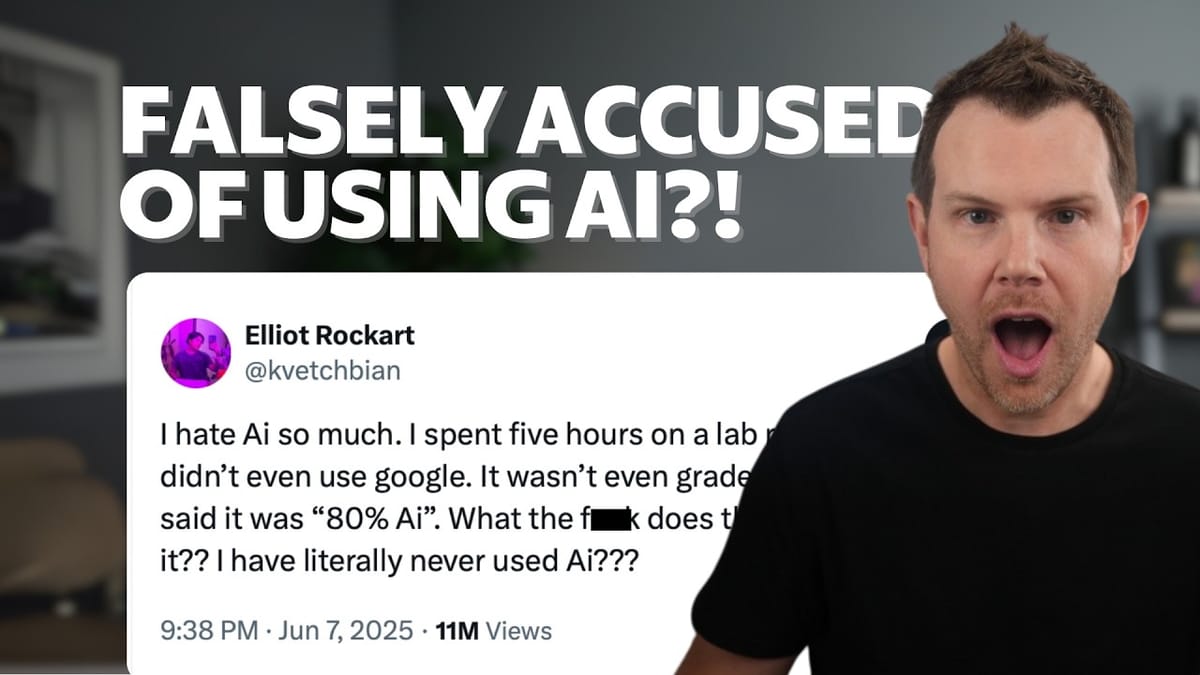
A post on X recently went viral with over 11 million views. The story? A student spent five hours writing a lab report from scratch, didn't use Google, and had never touched an AI tool in their life. Yet Turnitin, the AI detection software used by their school, flagged the work as 80% AI-generated. The grade? Thrown out.
This situation highlights a growing crisis that cuts both ways. Educators are scrambling to detect students using AI to cheat, and employers are questioning whether their teams are offloading work to ChatGPT. But there's a perspective most people overlook: what about the people who *didn't* use AI but get wrongly accused? Students and professionals increasingly need a way to defend themselves, which is exactly the gap Polygraf AI is trying to fill.
Polygraf AI is an AI detection tool available on AppSumo that positions itself as a solution for both sides of the equation. Educators can use it to check submissions, and students can run their own work through it preemptively to prove authenticity before handing anything in.
Polygraf AI Dashboard and Features
The Polygraf AI dashboard is straightforward, offering five quick actions depending on which plan you're on. The core feature is the AI text detector, where you paste in content and get a breakdown of how much appears to be AI-generated versus human-written.
Beyond basic detection, higher-tier plans unlock additional tools including an article generator, a copyright detector, and an AI highlighter that pinpoints exactly which portions of your text triggered the AI flag. That highlighter feature is particularly interesting for anyone trying to understand *why* their content is being flagged, though it's not available on the lifetime deal.
Pricing: Lifetime Deal vs. Annual Plan
Polygraf AI offers two purchasing options through AppSumo. The lifetime deal comes in at $59 and includes 150,000 monthly tokens for AI detection, which works out to roughly 135,000 words per month. One thing worth noting: the pricing is token-based, not word-based, even though AppSumo's marketing references both. Your account dashboard only shows token counts.
If you need more capacity, there's an annual plan at $159 per year that bumps you up to one million monthly tokens (approximately 900,000 words). The annual plan also unlocks the full feature set including article generation, copyright detection, and the AI highlighter tool. AppSumo now lets you toggle between lifetime and annual pricing right on the product page, which is a nice touch for comparison shopping.
Testing Setup: AI vs. Human Content
To give Polygraf AI a fair shake, two distinct pieces of content were prepared for testing. The first was a completely AI-generated article: Claude was asked to write a fake 1995-era interview with Eddie Van Halen, producing roughly 1,400 words of 100% AI content.
The second piece was an authentic 1995 Guitar World interview with Eddie Van Halen, a real article written long before generative AI existed. At 5,500 words, it's unquestionably human-written. These two extremes create a clean testing framework: any decent AI detector should flag the first as AI and clear the second as human. The same content was also run through QuillBot's AI detector and GPT-Zero for a head-to-head comparison.
AI Content Detection Results
The results on the AI-generated content were revealing. Polygraf AI analyzed the Claude-generated interview and returned a score of just 20% AI-generated, meaning it classified 77% of the content as human-written. It also incorrectly identified Gemini as the AI model used, when the content was actually generated by Claude. Whether that's a knock on Polygraf or a testament to how convincing Claude 4's output has become is debatable, but either way, the detection missed badly.
QuillBot performed similarly, tagging 28% of the text as AI-generated. Slightly more accurate than Polygraf, but still far from catching what was entirely synthetic content. GPT-Zero, on the other hand, nailed it outright, confidently labeling the text as 100% AI-generated. A clear win for the free tool in this round.
QuillBot and GPT-Zero Comparison
It's worth noting that each tool has different input limits on their free tiers. QuillBot caps you at 1,200 words, and GPT-Zero limits input to 5,000 characters, so the AI-generated content had to be trimmed for both. Polygraf had no such limitation on this test, making it the only tool that analyzed the full text. Even with that advantage, it came in last.
The free tools do come with trade-offs beyond accuracy. QuillBot and GPT-Zero both returned results almost instantly, while Polygraf's analysis took noticeably longer. For quick spot-checks, the speed difference matters, especially if you're a student trying to verify your work before a deadline.
Human Content Verification
The human-written content test is arguably more important. This is the scenario that matters most to falsely accused students: can the tool correctly identify genuinely human writing?
Polygraf AI returned a result of 3.6% AI-generated, again incorrectly attributing it to Gemini. While 3.6% is a low false-positive rate, it's not zero, and in an academic setting, even a small AI flag could raise questions. GPT-Zero confidently declared the entire text human-written with no caveats. QuillBot matched that result, returning 100% human-written instantly. Both free tools passed this critical test cleanly.
Final Verdict: Is Polygraf AI Worth It?
The results paint a tough picture for Polygraf AI. In a two-part test with clear-cut content, it struggled on both sides. It found human content where there was none (rating AI-generated text as mostly human) and found traces of AI content in a decades-old magazine interview. GPT-Zero swept both tests flawlessly, and QuillBot handled the human detection perfectly while only slightly underperforming on the AI-generated side.
For students worried about being falsely flagged, GPT-Zero appears to be the most reliable free option for pre-checking your work. It correctly identified both the AI-generated and human-written content without hesitation. If you're an educator, the same logic applies: free tools currently outperform Polygraf in raw detection accuracy.
That said, Polygraf's additional features like the AI highlighter and copyright detector on the annual plan could add value for power users. But based purely on detection accuracy, it's hard to recommend Polygraf over the free alternatives available today.
Watch the Full Video
Prefer watching to reading? Check out the full video on YouTube for a complete walkthrough with live demos and commentary.