Reach Inbox Review: AppSumo's Cold Outreach Tool of 2024
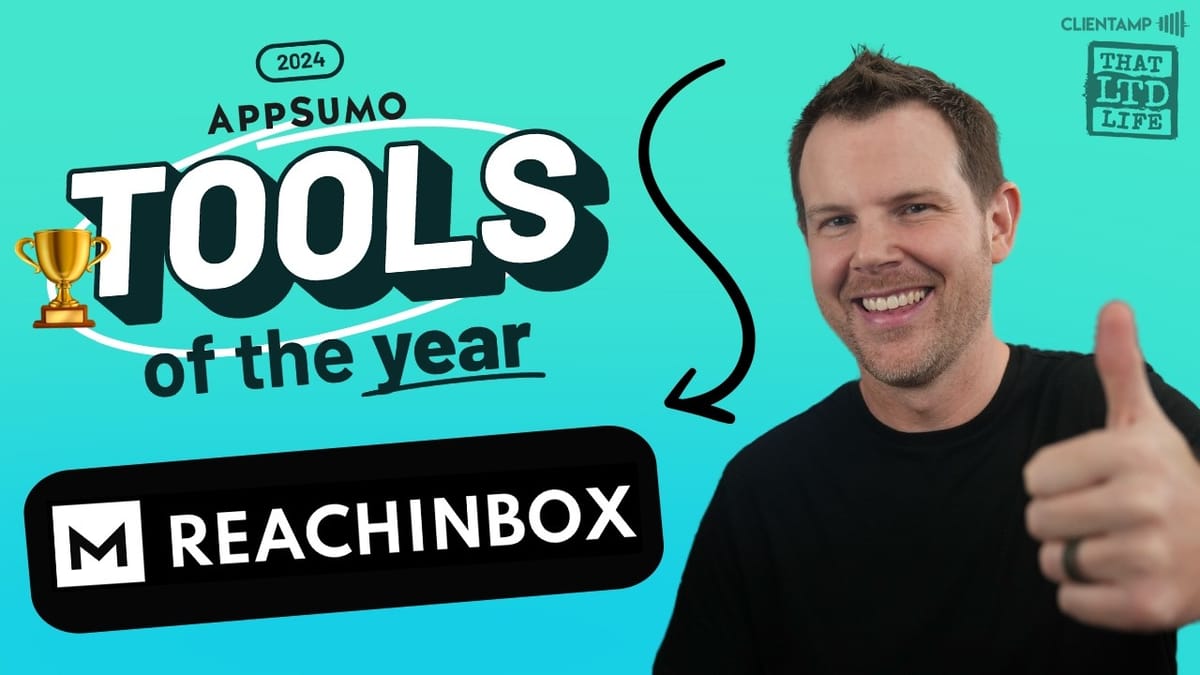
Reach Inbox was named AppSumo's Cold Outreach Tool of the Year for 2024, and after putting it through its paces, it's easy to see why. Here's a full breakdown of every feature that matters.

Reach Inbox
An all-in-one cold email outreach platform with AI writing, multi-inbox management, provider matching, and white-label agency features.
Cold outreach professionals, lead generation agencies, and small business owners who need to send high-deliverability email campaigns at scale.
Instantly, Smartlead, Lemlist, Woodpecker
Why Reach Inbox Won AppSumo's Tool of the Year
I reviewed a lot of cold outreach tools in 2024, and I genuinely did not expect Reach Inbox to blow past the competition the way it did. AppSumo named it their Cold Outreach Tool of the Year, and after spending real time inside the platform, I can see exactly why.
What sets Reach Inbox apart isn't one killer feature — it's the overall caliber of the experience. The interface is clean and intuitive, the feature set is deep without being overwhelming, and the thoughtful details (like AI-powered out-of-office rescheduling) show a team that actually understands the cold email workflow. This honestly feels like it could be a monthly SaaS product and nobody would question the price.
Plans and Pricing on AppSumo
Reach Inbox is available on AppSumo as a lifetime deal with four tiers, and the plans are genuinely generous. You get unlimited everything except monthly active leads — 5,000 on tier one, scaling up to 100,000 on tier four.
If you're running this for clients, you'll want tier two or above for additional workspaces that keep client data properly segmented. Agency owners should look straight at tier four, which unlocks complete white labeling and API access. The AI writing credits also scale with your tier: 3,000 words per month on tier one up to 50,000 on tier four.
Loading In Your Leads
Reach Inbox doesn't generate leads for you — you'll need a separate tool for list building. What it does handle beautifully is importing those leads once you have them. You can upload a CSV (with a sample file provided), connect a Google Sheet, or enter contacts manually.
The lead management dashboard is where you start to notice the quality of Reach Inbox's UI. It feels like a clean executive apartment — tons of data available without ever feeling cluttered. At a glance you can see total leads, contacted leads, open rates, and bounce counts. Editing lead details is just a click away, and you can add custom variables like business names or personalized references to use in your outreach templates.
Connecting Email Accounts
This is where Reach Inbox truly shines. You're not limited to a single sending account — in fact, the tool is designed around using multiple inboxes. It supports Google Workspace via OAuth, Gmail through SMTP, Outlook accounts, and standard SMTP/IMAP connections.
The real magic is that Reach Inbox is smart enough to identify which provider a recipient uses and automatically select a matching sender account. Send from Google to Google, Outlook to Outlook — keeping that relationship tight dramatically improves your deliverability. If setting up multiple inboxes feels overwhelming, their done-for-you email setup lets you spin up as many Google Workspace accounts as you need for just $3 per month each, with Office 365 support on the way.
Email Warmup
Before you fire off any campaigns, you need to warm up your sending accounts. Reach Inbox handles this automatically — just make sure the warmup toggle is enabled, and the default settings will do the rest.
What happens behind the scenes is that Reach Inbox sends emails to other users on the platform, who automatically open and reply to them. This builds your sender reputation so email providers see your account as active and trustworthy, not just a cold-email cannon. One practical tip: don't use your primary inbox for cold outreach. Get a separate domain. But if you do share an inbox, Reach Inbox provides a tag you can use to filter out warmup messages so they don't clutter your day-to-day email.
Creating a Campaign
Campaigns live under the paper airplane icon, and building one is straightforward. Give your campaign a name, select which lead lists to target, and you're into the sequence builder.
Reach Inbox gives you three ways to create your email content: generate it from scratch with AI, pick from a solid template library, or write it yourself. You can also mix and match — use AI for the first email and a template for the A/B variant. The campaign builder supports multi-step sequences with configurable delays between steps, so you can set up a full drip sequence with different messaging at each stage.
The AI Writer
The built-in AI writer is surprisingly capable. You answer two questions — what's the goal of the email, and what value are you providing to the recipient — and it generates a complete cold email draft. If you don't love the first version, regenerate with a click.
You get solid control over the output: adjust the maximum body length (shorter is usually better for cold email), dial up a creativity slider, toggle Spintax on or off, set the tone, and choose how many paragraphs you want. The AI isn't a one-time thing, either. Once your email is in the sequence builder, you can click back into the AI writer at any point to refine or completely rewrite the copy. It's always accessible, never buried.
Building Sequences and A/B Testing
The sequence builder is where your campaign really takes shape. Each "step" in the sequence is a separate email sent after a configurable delay. Within each step, you can create A/B variants to test different subject lines, copy, or approaches.
It's important to understand the distinction: "Add New" within a step creates an A/B variant of that same email, while "Add Step" creates an entirely new email in the sequence with its own delay timer. Before sending anything live, use the preview button to see exactly what the email will look like, or send a real test email to yourself. You can even run it through a service like Mail Tester to check deliverability scores. Sequences can also be saved as templates for reuse across different campaigns and accounts.
Scheduling Your Campaigns
Scheduling is clean and flexible. Set your sending window — say 9 AM to 6 PM — choose your time zone, and pick which days of the week emails should go out. Monday through Friday is the default, which makes sense for most B2B outreach.
You can create multiple schedule templates and reuse them across campaigns, which is a nice quality-of-life touch if you're managing several outreach efforts simultaneously.
Campaign Options and Deliverability Features
The options panel is packed with thoughtful features that show Reach Inbox was built by people who actually do cold outreach. The basics are here — stop sending on reply (on by default), open and link tracking, daily send limits, and time gaps between emails.
But the standout features go deeper. Provider matching automatically selects the right sending account based on the recipient's email provider. If you only have Google accounts connected, you can exclude Outlook recipients entirely so you're not tanking your reputation with poor cross-provider deliverability. Build a pristine Google reputation first, then expand to other providers later.
The AI-powered out-of-office rescheduler is genuinely brilliant. When someone auto-replies with an out-of-office message, Reach Inbox reads it, figures out when they'll be back, and reschedules the campaign to that date. If it can't determine the return date, you set a fallback delay. Bounce protection automatically pauses campaigns if your bounce rate creeps above a threshold — and honestly, if you're hitting 10% bounces, you should be stopping to fix your list quality anyway.
Subsequences for Automated Follow-Up
Subsequences let you branch your automation based on what happens during the campaign. When a lead's status changes — say they reply positively, book a meeting, or click a link — you can automatically move them into a dedicated follow-up sequence.
Triggers can be status-based (interested, meeting booked, meeting completed), action-based (link clicked, email opened), or even keyword-based if a reply contains a specific word. The subsequence builder works exactly like the main sequence builder, so there's no learning curve. You manage lead statuses manually by clicking on a contact and changing their status, which then triggers the appropriate subsequence.
OneBox: All Your Inboxes in One Place
When you're running campaigns across multiple Gmail, Outlook, and SMTP accounts, checking replies in each inbox individually would be a nightmare. OneBox solves this by pulling every conversation into a single unified view.
You can filter by lead status to quickly find the people who matter most — interested leads, booked meetings, and so on. The whole interface is keyboard-driven for power users, which makes processing a high volume of replies genuinely fast. It's one of those features that sounds simple but becomes indispensable once you're running real campaigns at scale.
Workspaces for Client Management
If you're using Reach Inbox for multiple clients, workspaces keep everything properly separated. Each workspace has its own email accounts, lead lists, and campaigns — there's no risk of cross-contamination between clients.
Switching between workspaces is a quick toggle in the top corner. Tier one gets you a single workspace, tier two gives you three, tier three bumps it to ten, and tier four tops out at twenty. For agency use, this structure makes it easy to scale without things getting messy.
White Labeling for Agencies
Tier four unlocks white labeling, and it's implemented really well. From your settings, select a workspace and you can customize the brand name, upload your own logo, and set up a custom domain.
The custom domain setup is straightforward — add a CNAME record pointing your subdomain to custom.reachinbox.net, verify it inside Reach Inbox, and you're live. Your clients will see your branding and your URL when they log in. There is a small "powered by Reach Inbox" notice at the bottom, so it's not 100% invisible — but honestly, your clients don't need to think you built the software yourself. What matters is that your brand stays top of mind every time they use the tool.
Final Verdict: An 8.2 Out of 10
Reach Inbox earned the highest score I've given any cold outreach tool: an 8.2 out of 10. The interface is polished, the feature set is deep, and the thoughtful details — provider matching, AI out-of-office rescheduling, bounce protection — show a maturity that most competitors in this space haven't reached yet.
This tool genuinely feels like it could sustain a monthly SaaS price tag, so grabbing it as a lifetime deal on AppSumo is a no-brainer if cold outreach is part of your business. Whether you're a solo operator sending a few thousand emails a month or an agency managing twenty client workspaces, Reach Inbox has a tier that fits. It's the real deal.
Watch the Full Video
Prefer watching to reading? Check out the full video on YouTube for a complete walkthrough with live demos and commentary.