How to Stop Content Theft: Copyscape, DMCA & More
Someone was stealing my client's blog posts. Here's the exact process I recommended — from detection with Copyscape to filing DMCA takedowns — to protect their content.

When You Discover Someone Is Stealing Your Content
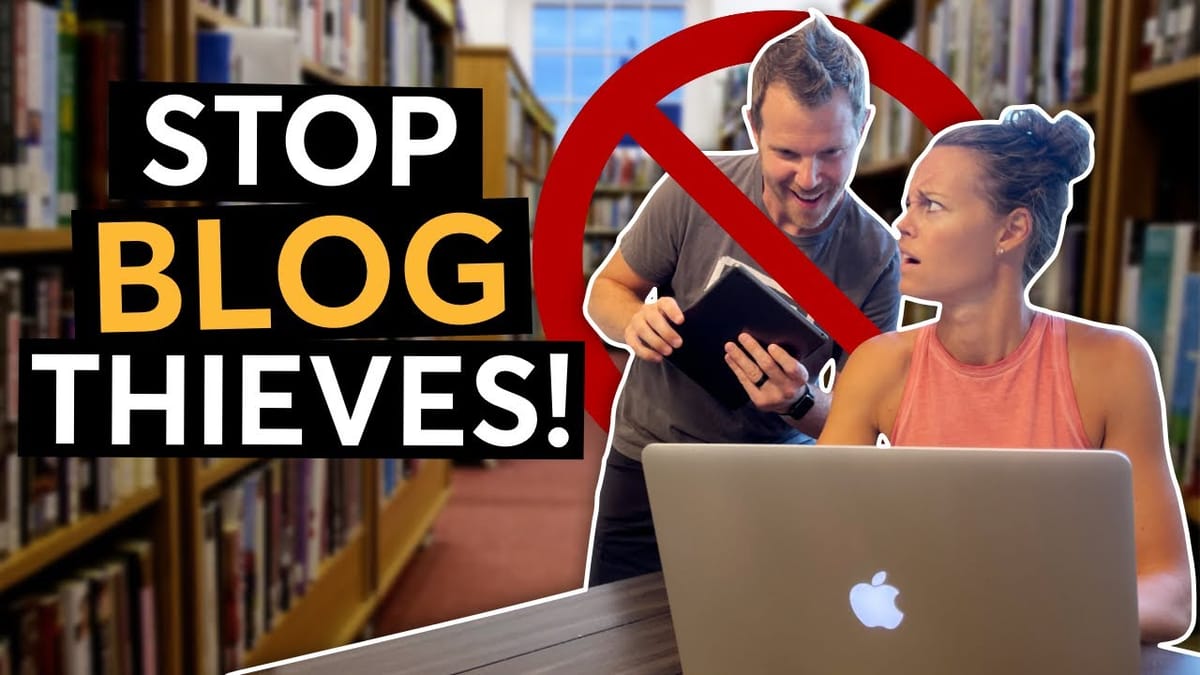
Imagine this: you're reviewing screen recordings in Microsoft Clarity, a free conversion rate optimization tool, and you notice something unsettling. Visitors are systematically selecting entire blog posts, copying every word, and leaving. That's exactly what happened to one of my clients — a relationship blog called Rebel Love.
Through Clarity's session recordings, they could actually watch it happening in real time. Worse still, the UTM parameters on the visits revealed these content thieves were on their own mailing list, clicking through from email campaigns and then scraping each new article the moment it was published. The client wanted to know: can we block them? Can we stop this from happening?
It's a frustrating situation that more bloggers face than you'd think, especially once your content starts gaining traction. The good news is there's a clear process you can follow. The bad news is there's no magic button that prevents it entirely.
What Not to Do: Don't Wreck Your User Experience
The first instinct most content creators have is to block right-clicking or disable text selection on their site. There are plenty of WordPress plugins and JavaScript snippets that do exactly this. But I strongly advise against it.
Think about it this way: if you have a thousand visitors, maybe one of them has malicious intent. The other 999 are legitimate readers who might want to highlight a word to look up its definition, copy a quote to share with a friend, or simply interact with your page the way they do on every other website. When you disable those basic functions, your site feels locked down and untrustworthy — like walking into a house where every room has a padlock on the door.
Beyond the poor user experience, these protections don't actually work. Anyone with even basic technical knowledge can simply right-click, choose "View Page Source," and copy your entire article straight from the HTML. They can strip the markup in seconds and have your clean text ready to paste wherever they like. So you'd be hurting your real audience while doing nothing to stop the people you're actually worried about.
Detect Plagiarism With Copyscape
Since prevention isn't really viable, the smart approach is detection and response. The best tool for this job is Copyscape. At its most basic level, Copyscape is completely free — you paste in a URL, and it scans the web to see if anyone has duplicated your content.
For ongoing protection, Copyscape offers a monitoring service called Copysentry. The entry-level plan starts at $5 per month for up to 10 pages with weekly checks. Each additional page costs about $0.25 per month. If you need daily monitoring, the premium tier runs $20 per month with a slightly higher per-page cost. For most bloggers, the weekly plan is more than sufficient. Just build that small cost into your content budget as your blog grows — it's a worthwhile investment.
Grammarly also offers a plagiarism checker that scans over 16 billion web pages. While it's primarily designed for checking whether content you've received (say, from a freelance writer) is original, you can use it in reverse by pasting your own text to see if it appears elsewhere. The downside is that Grammarly doesn't support URL-based checking or automated scheduled monitoring, so Copyscape remains the more practical choice for ongoing protection.
File a DMCA Takedown When It Matters
So Copyscape flags a match — someone has published your content on their site. What now? Start by identifying where the offending site is hosted. Tools like WhoIsHostingThis.com or HostingChecker.com let you enter any URL and find out which hosting provider is behind it. Once you know the host, contact them directly and report the plagiarized content. Reputable hosting providers take these claims seriously and will typically force the site owner to remove the content or risk account termination.
If the host is unresponsive — maybe they're a smaller provider, or the site is hosted in a country with lax copyright enforcement — you'll need to escalate with a formal DMCA takedown. Services like DMCA.com offer toolkits and managed takedown services. Their pricing ranges from a free quote up to $199 per site for a fully managed removal.
Before you spend money on takedowns, though, consider whether the stolen content is actually hurting you. Google is remarkably good at identifying the original source. It knows when your content was first indexed and will typically rank yours above any duplicate. The copied version usually ends up buried where nobody sees it. Monitor the situation: if the plagiarized version starts ranking for your target keywords, that's when it's time to invest in a formal DMCA takedown. Otherwise, it may not be worth the cost and effort for content that Google is already ignoring.
Watch the Full Video
Prefer watching to reading? Check out the full video on YouTube for a complete walkthrough with live demos and commentary.