VdoCipher Review: Widevine DRM Video Protection for Courses
VdoCipher provides Hollywood-grade Widevine DRM video protection for online courses without the complexity of enterprise solutions. This review tests video security, player quality, and piracy prevention. Covers pricing, setup, and whether DRM hosting is worth it for course creators.

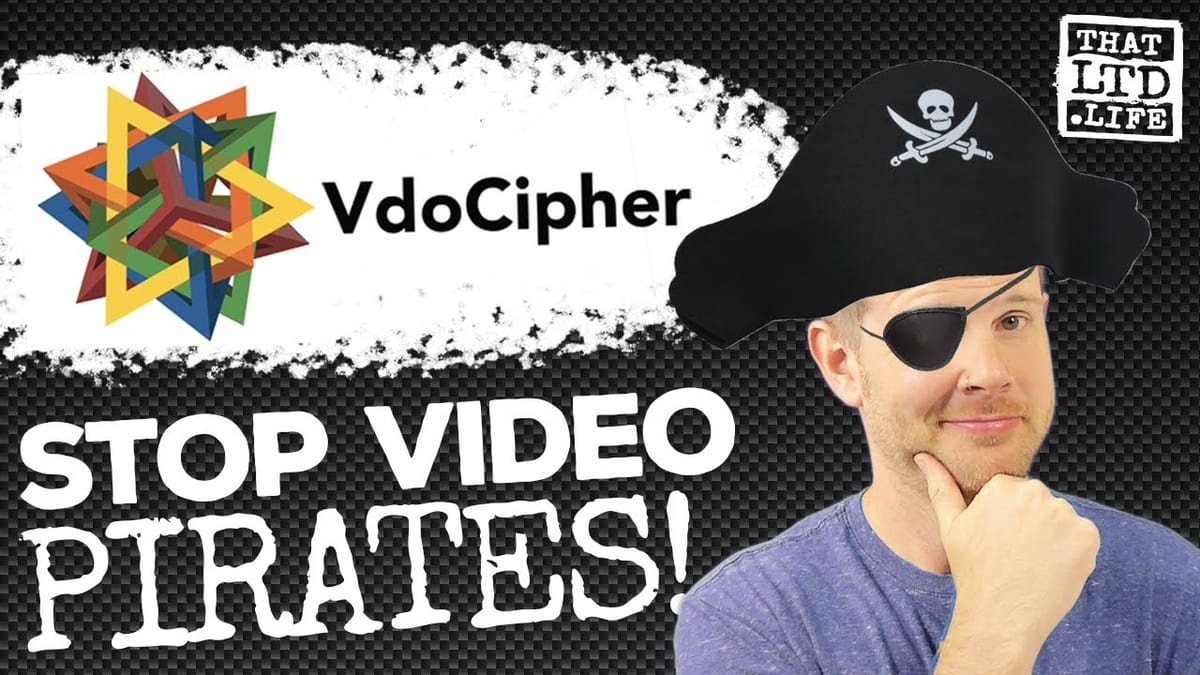
VdoCipher
A video hosting and playback platform that uses Google's Widevine DRM encryption to prevent unauthorized downloading and redistribution of video content.
Online course creators and membership site owners who need to protect premium video content from piracy.
VooPlayer, Wistia, Vimeo OTT
Why Video Piracy Is a Real Problem for Course Creators
If you run a membership site or sell online courses, video piracy probably keeps you up at night — or at least it should. It's trivially easy for someone to rip a video from most standard players using a free Chrome extension, then redistribute your entire course on a file-sharing site. The damage compounds fast: lost revenue, devalued content, and a demoralizing realization that your work is being given away for free.
The big players solved this problem long ago. Netflix, Hulu, and HBO all rely on Google's Widevine DRM — the same encryption standard that protects billions of dollars in streaming content. The catch? Implementing Widevine yourself requires specialized CWIP (Certified Widevine Implementation Partner) training. That's a steep barrier for a solo course creator or small agency.
VdoCipher bridges that gap. It's a video hosting platform that bakes Widevine DRM directly into its player, giving you enterprise-grade content protection without the enterprise-grade complexity.
Uploading and Processing Videos
Getting videos into VdoCipher is straightforward. Hit the upload button, pick your file, and you're done. You can also pull files from Dropbox or Google Drive if that's more your workflow. Once uploaded, the video enters a processing queue similar to what you'd see on YouTube — the file gets encoded into multiple formats optimized for iOS, Android, and various screen resolutions.
Processing times are reasonable. In testing, a standard review video was ready for playback within a few minutes, and VdoCipher sends an email notification when encoding is complete so you're not stuck refreshing a dashboard.
One thing to keep in mind: the multi-device encoding means your files will roughly double in storage size. A 638 MB source file consumed about 1.1 GB of VdoCipher storage after processing. That's important math to do when planning your library, especially on the AppSumo lifetime deal that includes 20 GB of storage.
Storage, Bandwidth, and the Lifetime Deal Math
The AppSumo lifetime deal includes 20 GB of storage and 150 GB of bandwidth — and that bandwidth figure is lifetime, not monthly. Your first reaction might be sticker shock, but there's actually a smart business rationale here. Storage and bandwidth have real, recurring costs. Companies that promise unlimited resources on lifetime deals often go under because the economics simply don't work long-term.
VdoCipher's model is more sustainable. The lifetime allocation gets you started, and when you need more, you buy it. Extra storage runs about $0.70 per gigabyte, and bandwidth is $0.18 per gigabyte. Yes, that's a markup over raw AWS costs — VdoCipher uses Amazon CloudFront, one of the fastest CDNs available — but you're paying for the convenience of managed Widevine DRM, not just dumb hosting.
For a course creator with a modest library, the included storage and bandwidth could last a surprisingly long time. And when it runs out, the per-gigabyte pricing is predictable and reasonable. This is a company that looks like it's built to stick around, which is exactly what you want from an LTD.
WordPress Integration and Embedding
If you're running a WordPress-based course or membership site, setup is painless. Install the VdoCipher plugin, connect it with your API secret key, and you're ready to embed videos using shortcodes pulled straight from the VdoCipher dashboard. Configuration options are minimal but cover the essentials: default resolution, watermark settings, and basic playback controls.
Not on WordPress? No problem. VdoCipher also supports embedding via script tags or iframes, so you can drop a protected video into virtually any platform. The embed codes are easy to find in the dashboard, though a dedicated Chrome extension for quick access to those codes would be a welcome quality-of-life addition.
There's also a built-in analytics panel, though without extensive data it's hard to evaluate how useful those insights are at scale. For most course creators, the combination of your LMS analytics and VdoCipher's playback data should cover your reporting needs.
Does the DRM Actually Work? Real-World Piracy Tests
This is the question that matters most, so let's cut to the results. Three popular download tools were thrown at a VdoCipher-protected video: Video Stream Downloader (Chrome extension), Video Downloader Professional (Chrome extension), and PullTube (a desktop app).
PullTube threw an error immediately — it couldn't even attempt the download. Video Downloader Professional reported that no videos were found on the page. Video Stream Downloader technically found something and managed to download files, but here's the thing: the original video was over 600 MB, and the downloaded files were only 9 MB. Playing them back produced nothing but a gray screen.
That's Widevine DRM doing exactly what it's supposed to do. The video data is encrypted in transit and at rest, so even if a tool manages to grab the stream, what it captures is useless without the decryption keys. It's the same technology keeping Netflix content off torrent sites, and it works just as well here.
What's Missing: Player Customization
VdoCipher's biggest weakness right now is player styling. There are essentially no options to customize the look and feel of the video player — no brand colors, no custom play/pause buttons, no visual differentiation from the default skin. If brand consistency across your course platform matters to you, this is a notable gap.
Competitors like VooPlayer offer significantly more marketing and branding features in their players. You can add CTAs, customize every visual element, and make the player feel like a native part of your site. VdoCipher trades all of that for ironclad content protection, which is a deliberate prioritization — but it means you're choosing security over polish.
For most serious course creators, that's probably the right trade-off. Your students care about the content, not the shade of blue on the progress bar. But it would be nice to see VdoCipher close this gap over time.
Final Verdict: 9.2 Out of 10
VdoCipher earns a strong 9.2 out of 10 for delivering on its core promise: Hollywood-grade video protection that's accessible to independent course creators. The Widevine DRM implementation genuinely works, the upload and embedding workflow is clean, and the business model is built to last.
At $79 for the lifetime deal, it's a solid investment — but only if you actually need it. If you've never sold a course or don't have content worth protecting, save your money. This tool is purpose-built for creators who already have a profitable course business or who produce content that's actively being pirated.
The missing player customization options and the finite bandwidth allocation are the only real drawbacks, and neither is a dealbreaker. If protecting your video content is a priority, VdoCipher is the most accessible path to enterprise-level DRM available today.
Watch the Full Video
Prefer watching to reading? Check out the full video on YouTube for a complete walkthrough with live demos and commentary.
Frequently Asked Questions
What is VdoCipher?
VdoCipher is a video hosting platform with Hollywood-grade DRM protection using Widevine technology. It prevents video downloading, screen recording, and unauthorized sharing of premium video content.
How does VdoCipher prevent video piracy?
VdoCipher uses Widevine DRM encryption, dynamic watermarking with viewer information, and anti-screen-capture technology to make it extremely difficult to pirate hosted videos.
Is VdoCipher good for online courses?
Yes, VdoCipher is specifically popular among course creators and e-learning platforms that need to protect premium video content from unauthorized distribution and piracy.
How does VdoCipher compare to BunnyStream?
VdoCipher offers stronger DRM protection than BunnyStream, making it better for premium content protection. BunnyStream is cheaper and simpler for general video hosting without strict anti-piracy needs.
Can VdoCipher integrate with WordPress LMS plugins?
Yes, VdoCipher provides plugins and embed codes that work with LearnDash, TutorLMS, and other WordPress LMS platforms for secure video delivery within course modules.
Get Dave's Toolbox
The tools I actually use, every Tuesday. Free. No spam.
No cost. No spam. Unsubscribe anytime.